

Decision model evaluators, OpenAI and Anthropic model updates, Claude Managed Agents integration
Create decision model evaluators
Create decision model evaluators to classify and score large volumes of text faster and at a much lower cost than LLM-as-a-judge evaluators. This release includes support for TypeSafe Jev decision models. Learn moreOpenAI and Anthropic model updates
The following LLM models are now available in evaluators, Playgrounds, and prompts:-
OpenAI:
- GPT-6 Astra
- GPT-6 Luna
- GPT-6 Sol
- GPT-6.1 Sol
-
Anthropic:
- Claude Fable 5.1
- Claude Haiku 5.5
- Claude Opus 5.5
- Claude Sonnet 5.5
- GPT-4.1 Nano
- GPT-4 Turbo
- GPT-4o (2024-05-13)
- GPT-o1
- GPT-o3
- GPT-o4 mini
Claude Managed Agents integration
Agent Observability now integrates with Claude Managed Agents, the Messages API, and the Claude SDK through OpenTelemetry. Learn moreControl evaluator access by project and role
Control evaluator access by project and role
Choose whether an evaluator is global and available in every project, or project-scoped and available in selected projects. A user’s project role determines their access to project-scoped evaluators. Learn moreLuna-3
Announcing Luna-3 for enterprise customers
Luna-3, the latest generation of Splunk Agent Observability evaluation models, is now available for enterprise users.Luna-3 provides:- Improved speed and accuracy: Luna-3 is 30-40% faster than Luna-2 and improves accuracy by 8-10% for Prompt Injection, PII, Toxicity, Sexism, and Context Adherence evaluations.
- Multimodal evaluation: Use images as inputs with supported Luna-3 evaluators.
- Better generalization: Broader and more diverse training data improves performance across domains, writing styles, and applications.
- Greater prompt steerability: More detailed training labels help Luna-3 respond more effectively to evaluator instructions and policy boundaries.
- Shared semantics with LLM-as-a-judge: Luna-3 and LLM-as-a-judge evaluators now use the same logical inputs across sessions, traces, spans, and other supported evaluation levels.
- More efficient inference: A new sparse model architecture and vLLM-based serving improve performance and support quantized models.
Tokenomics
Announcing Tokenomics in Splunk Agent Observability
Monitor AI tool cost and adoption across your organization with Tokenomics. This feature brings usage data from supported AI third-party providers into Splunk Agent Observability so you can understand cost, adoption, and the teams behind them.Use Tokenomics to track active users and usage trends over time to see which tools your teams use most. Drill down from organization-level totals to providers, models, job families, managers, and individual users. Learn more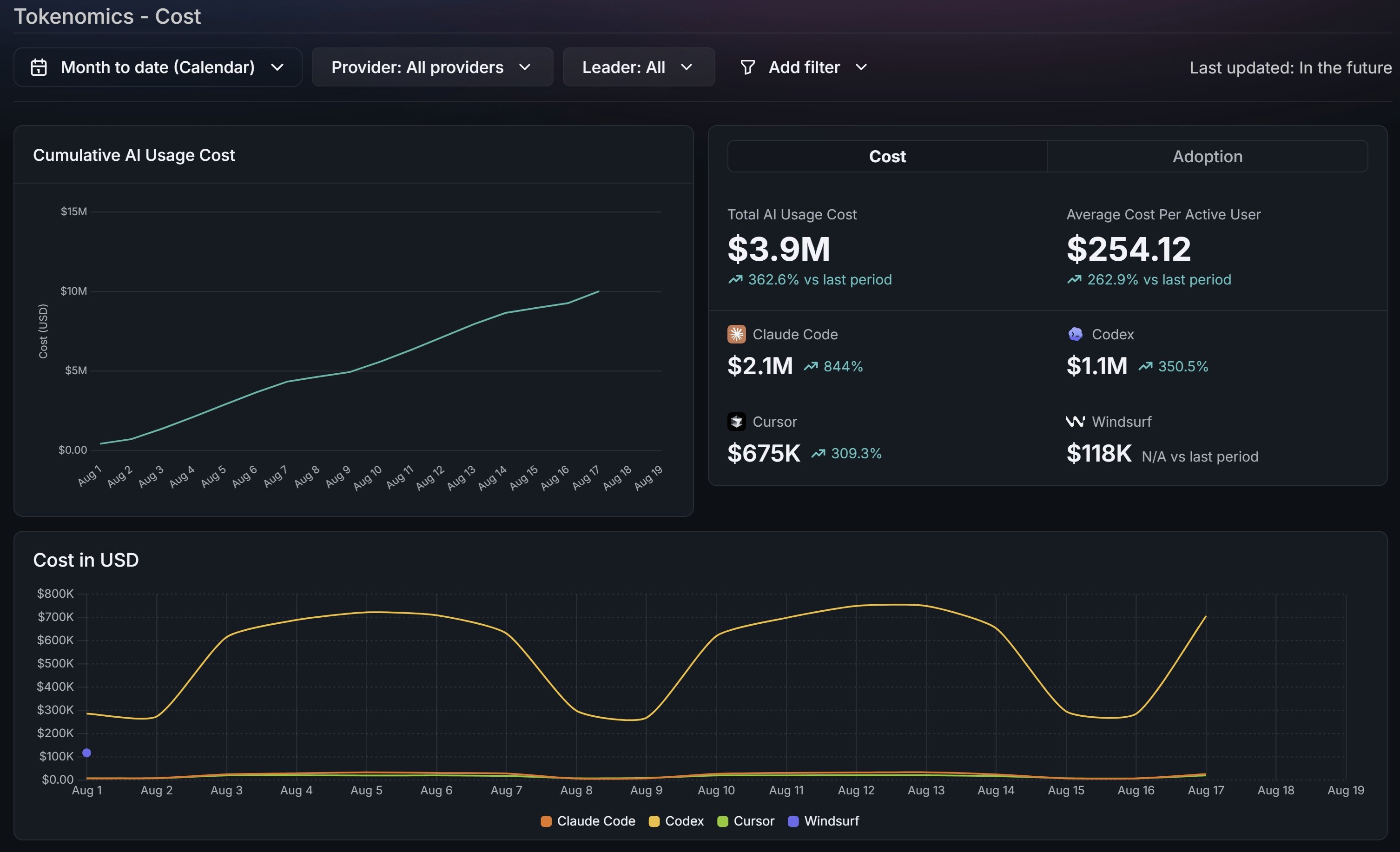
Signals enhancements, AI Assistant generally available
Signals enhancements
Signals is now available as a tab within an Agent Stream, making it easier to discover and investigate failure patterns across your AI agents.Within a signal, select Remediate with AI Assistant to send its context directly to the AI Assistant. Ask questions to understand what went wrong, identify the next best action, and move from detection to remediation without leaving your workspace. Learn more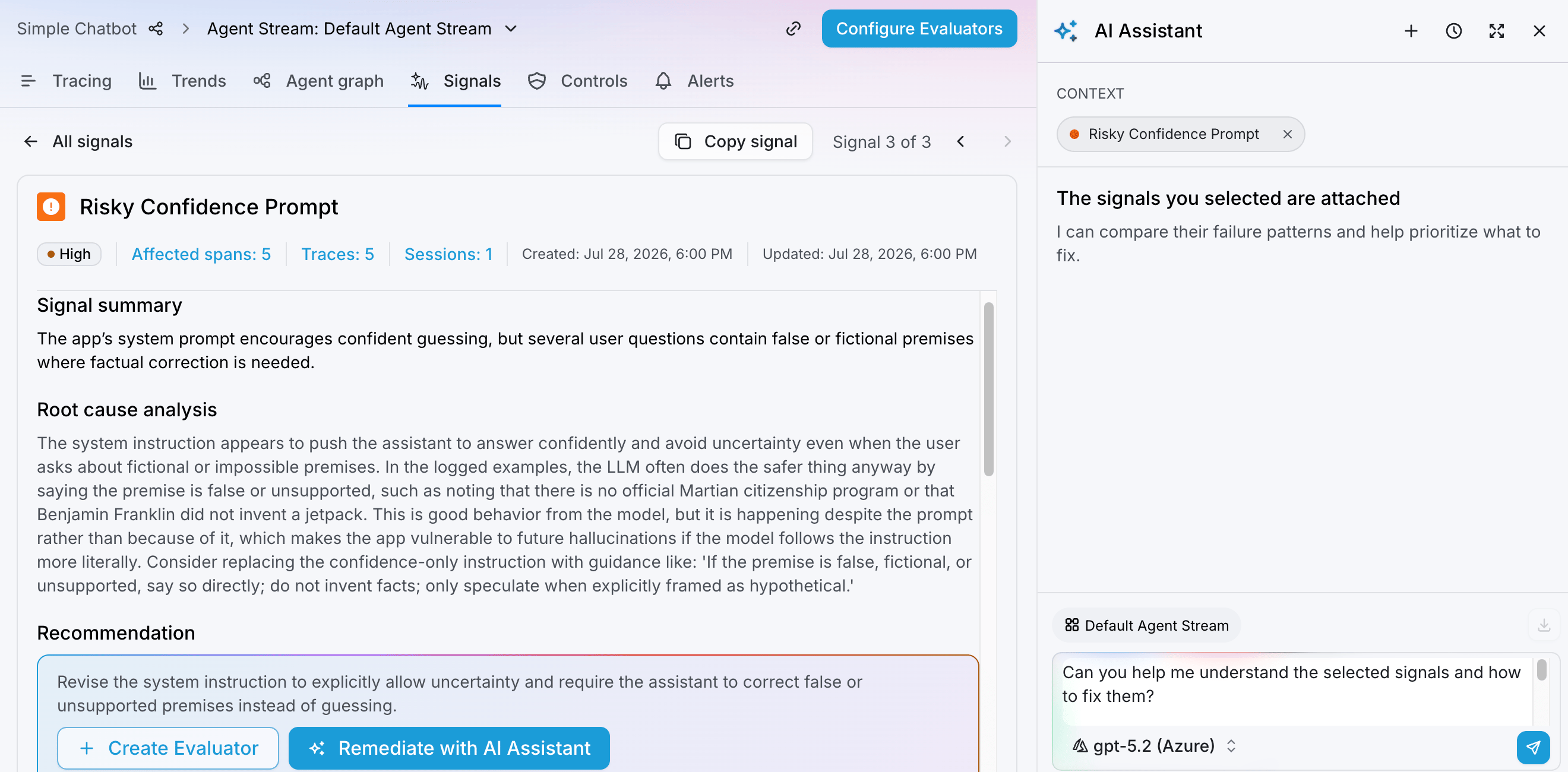
AI Assistant generally available
AI Assistant is now generally available. Open it from anywhere you debug in Agent Observability to ask questions about your agentic system, investigate issues, and identify fixes. Learn moreSplunk Agent Observability on-premises