

LLM-as-a-judge evaluators
LLM-as-a-judge evaluators are natural language prompts that are run against an LLM, using the input and output from a span, trace, or session. When the span, trace, or session is logged, all the details including inputs and outputs are sent to the LLM along with a prompt, and the response from the prompt is used to score the evaluator. The response needs to be a fixed type for the evaluator to be measured correctly. Currently the following output types are supported:
You can create and manage LLM-as-a-judge evaluators from the Splunk Agent Observability UI, or in code.
Create a new LLM-as-a-judge evaluator in the UI
1
Navigate to the evaluators section
Use the Splunk Agent Observability main menu to select Evaluators. Select the Create evaluator button.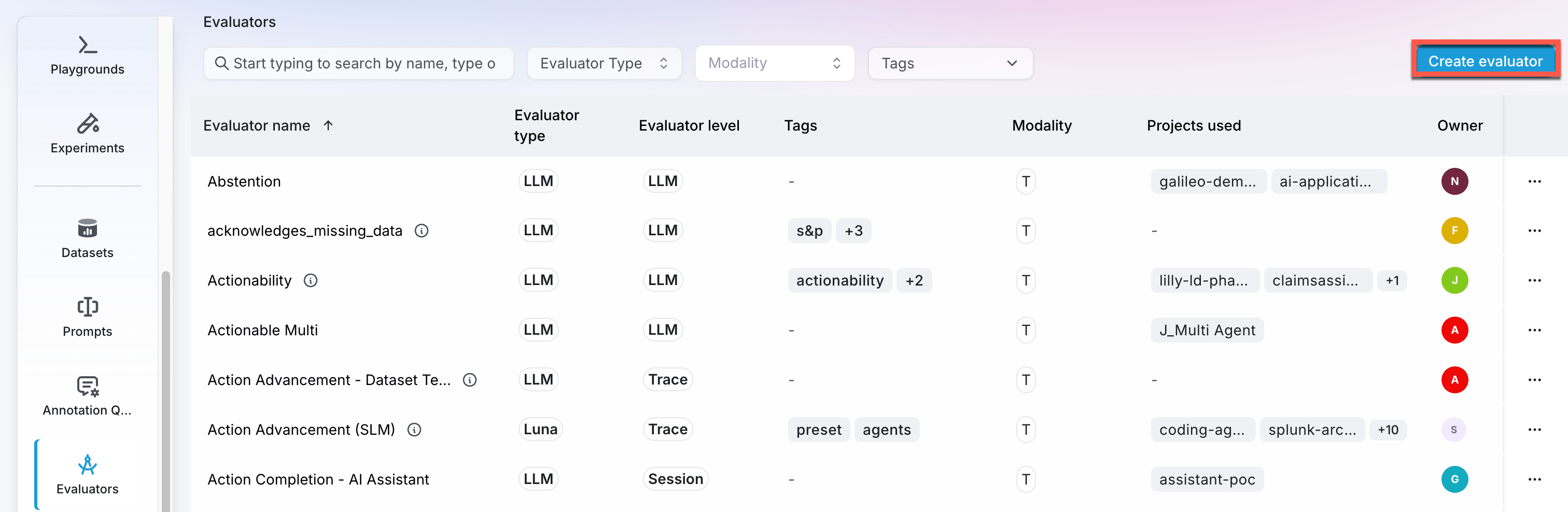
2
Select the LLM-as-a-Judge evaluator type
From the dialog that appears, choose the LLM-as-a-judge evaluator type. This allows you to create evaluators that use an LLM to evaluate responses based on criteria you define.
3
Give your evaluator a name and description
If you are planning to use this evaluator in an experiment, then the name you set here is the name of the evaluator that you pass to the run experiments function.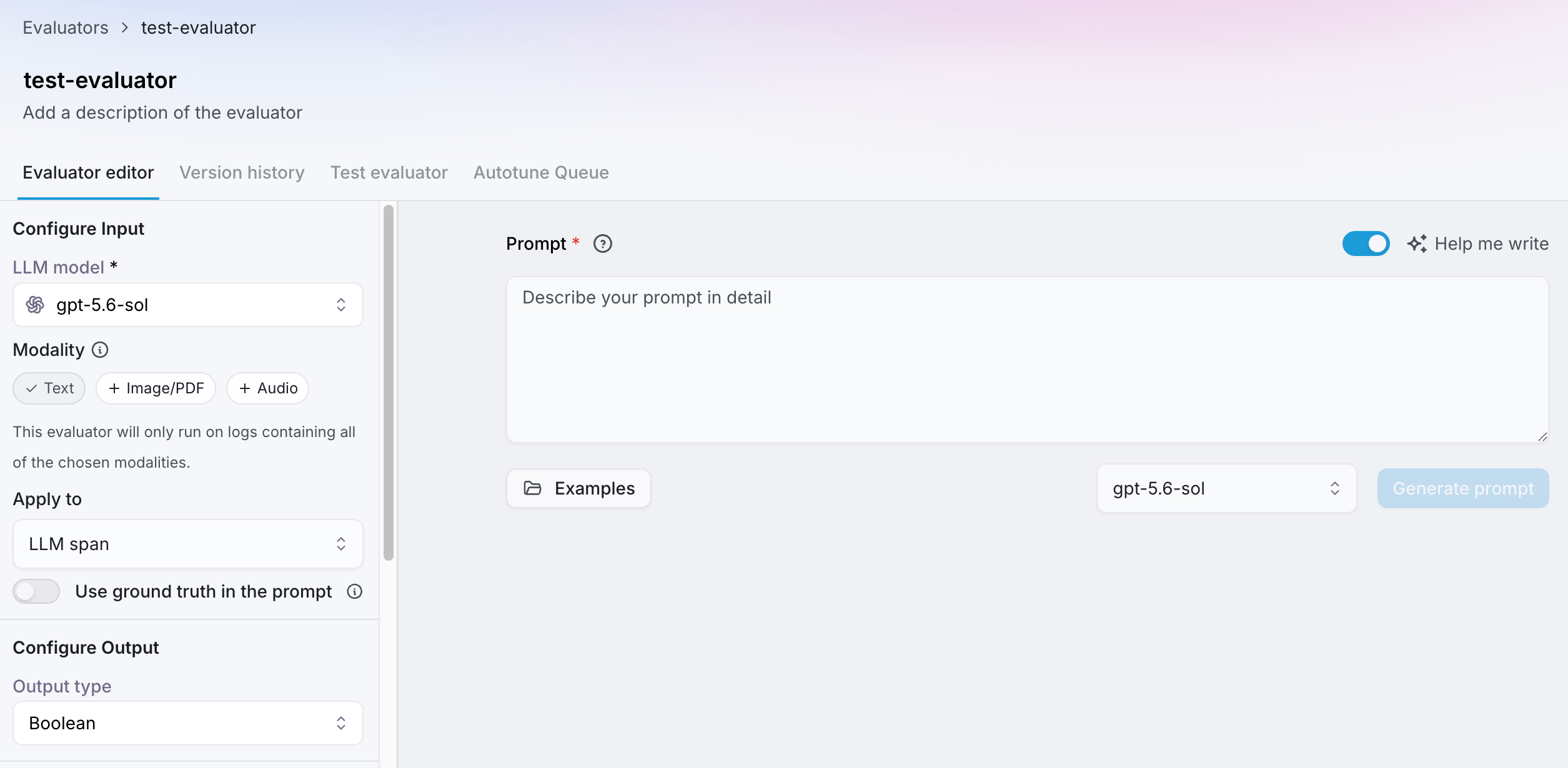
"Compliance - do not recommend any financial actions", you would pass this to an experiment like this:4
Define what this evaluator applies to
In the Apply to box, select what level this evaluator applies to.
5
Configure the evaluator
In the Prompt editor, configure the following fields:
- LLM model - select the model from the available integrations that you want to use to test this evaluator.
- Step-by-step reasoning - turn this on to see evaluator explanations, giving a reasoning behind the score. This will use more LLM tokens, and have a corresponding increase in cost.
- No of judges - select the number of judges to use. The evaluator is run against each judge, and an average score is returned. The more judges you use, the more accurate the score, but with a higher cost.
6
Configure the evaluator prompt
In the Prompt editor, enter your prompt. Ensure your prompt defines a clear rubric with explicit scoring criteria. For example:In this example, the rubric clearly defines the scoring criteria:This establishes a clear evaluation rubric where “completely followed” is the criterion for a passing grade, while any deviation from the guidance results in a failing grade.Also we recommend not to write any instructions in the prompt regarding the response format.Avoid statements like:
See our prompt engineering guide to learn more about writing an effective prompt, and what happens behind the scenes with your prompts.
7
Optional - get help writing a prompt using Help me write
To help you create an evaluator prompt, you can use the Help me write feature. This allows you to define how you want the evaluator to work in natural language, and Splunk Agent Observability will create the evaluator prompt for you.Once done, select the Generate prompt button to generate the evaluator prompt.
8
Test your evaluator
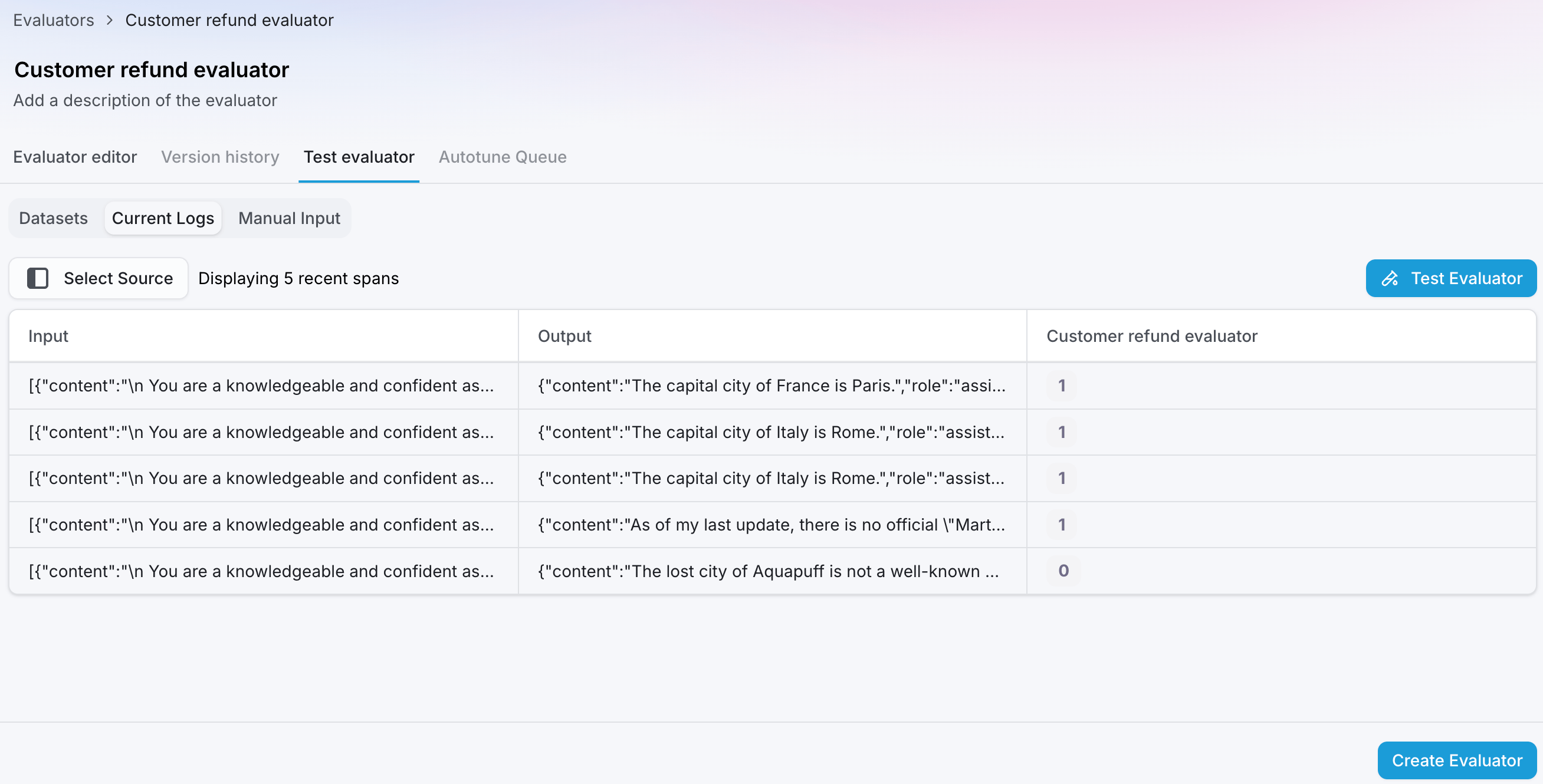
When you have your evaluator configured, it is important to test the evaluator against multiple inputs and outputs. You can then use the results of the tests to iterate on the evaluator prompt and configuration, for example experimenting with different models, or number of judges.To test your evaluator, head to the Test Evaluator tab. You can either test the evaluator by passing in a manual input, or by using logged sessions, traces, spans, or experiments.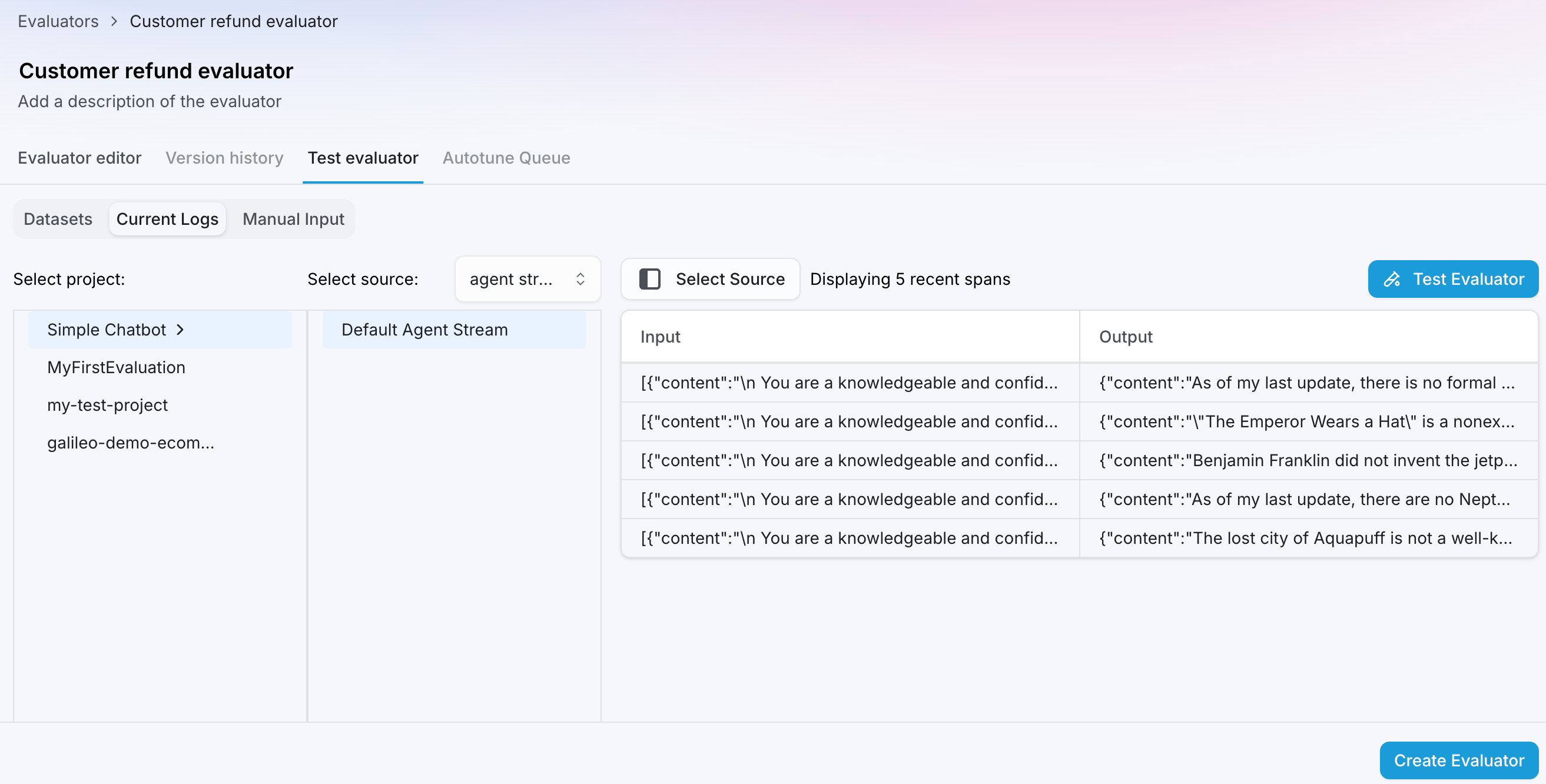
9
Save your evaluator
Once you are happy with your evaluator, select the Create evaluator button to save your evaluator. You can now enable this evaluator for your Agent Streams.
Create a new LLM-as-a-judge evaluator in code
In addition to creating custom LLM-as-a-judge evaluators through the Splunk Agent Observability UI, you can also create these in code.Create a custom evaluator
When you create a custom evaluator, you need to provide a name and the prompt to use. You can optionally also provide the output type, what it applies to, span, trace, or session, the model to use, if reasoning should be generated, the number of LLM judges to use, and any tags.Delete a custom evaluator
You can also delete an evaluator by name.Evaluator versions
As you use your evaluator against real-world data, you may want to iterate over the prompt or configuration to improve how it works when running against real user data. Every time you update the evaluator, a new version is created. This new version becomes the default. You can see the version history and select the default version from the Version History tab. From the version history, you can select the actions menu (…) to tag different versions as the default or restore a version.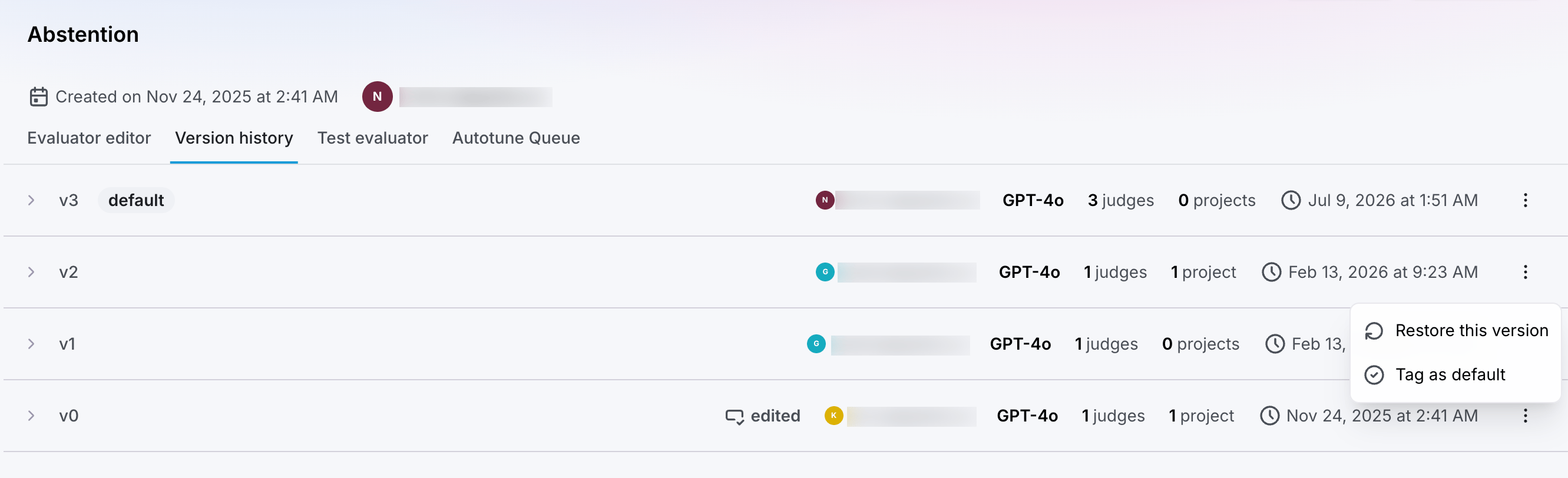
Best practices for LLM-as-a-Judge evaluators
When to use LLM-as-a-Judge evaluators
LLM-as-a-Judge evaluators are particularly valuable for:- Subjective evaluations: Assessing qualities like helpfulness, creativity, or appropriateness
- Complex criteria: Evaluating adherence to multiple guidelines or requirements
- Nuanced feedback: Getting detailed explanations about strengths and weaknesses
- Human-like judgment: Approximating how a human might perceive the quality of a response
Understanding the number of AI judges
The “Number of AI Judges” setting allows you to configure how many independent LLM evaluations to run in a chain-poll approach. This feature balances evaluation accuracy with processing efficiency:- Using more judges generally produces more consistent and reliable evaluations by reducing the impact of individual outlier judgments
- However, increasing the number of judges also increases processing time and associated costs
Limitations and considerations
While powerful, LLM-as-a-Judge evaluators have some limitations to keep in mind:- Potential bias: The LLM judge may have inherent biases that affect its evaluations
- Consistency challenges: Evaluations may vary slightly between runs
- Cost considerations: Using LLMs for evaluation incurs additional API costs
- Prompt sensitivity: The quality of evaluation depends heavily on how well the prompt is crafted
Next steps
LLM-as-a-Judge Prompt Engineering Guide
Learn best practices for prompt engineering with custom LLM-as-a-judge evaluators.
Evaluators overview
Explore Splunk Agent Observability’s comprehensive evaluators framework for evaluating and improving AI system performance across multiple dimensions.
Custom code-based evaluators
Learn how to create, register, and use custom code-based evaluators to evaluate your LLM applications.
Run experiments
Learn how to run experiments in Splunk Agent Observability using the Splunk Agent Observability SDKs and custom evaluators.